

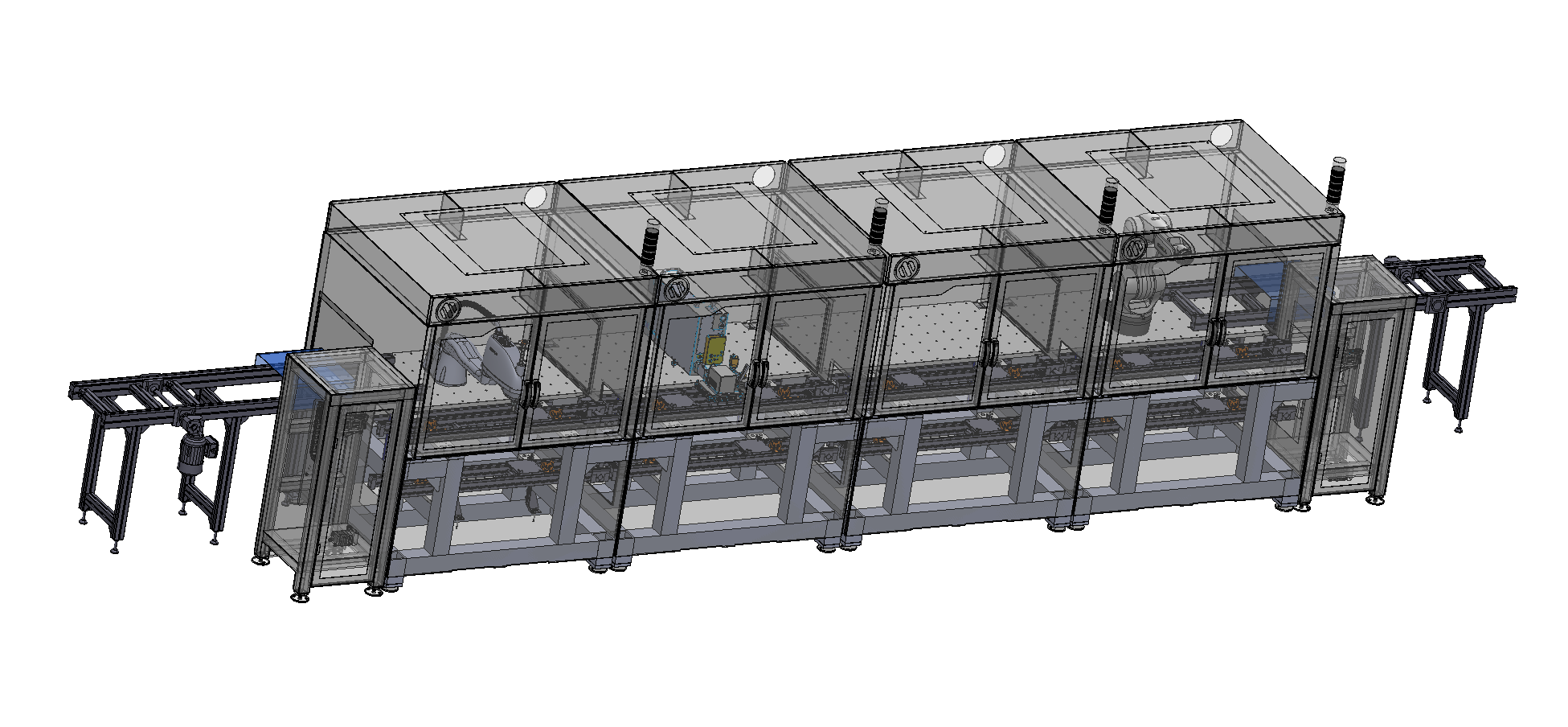
MTRONIQ Modular Automation System
Modular Platform for Automated Production Lines
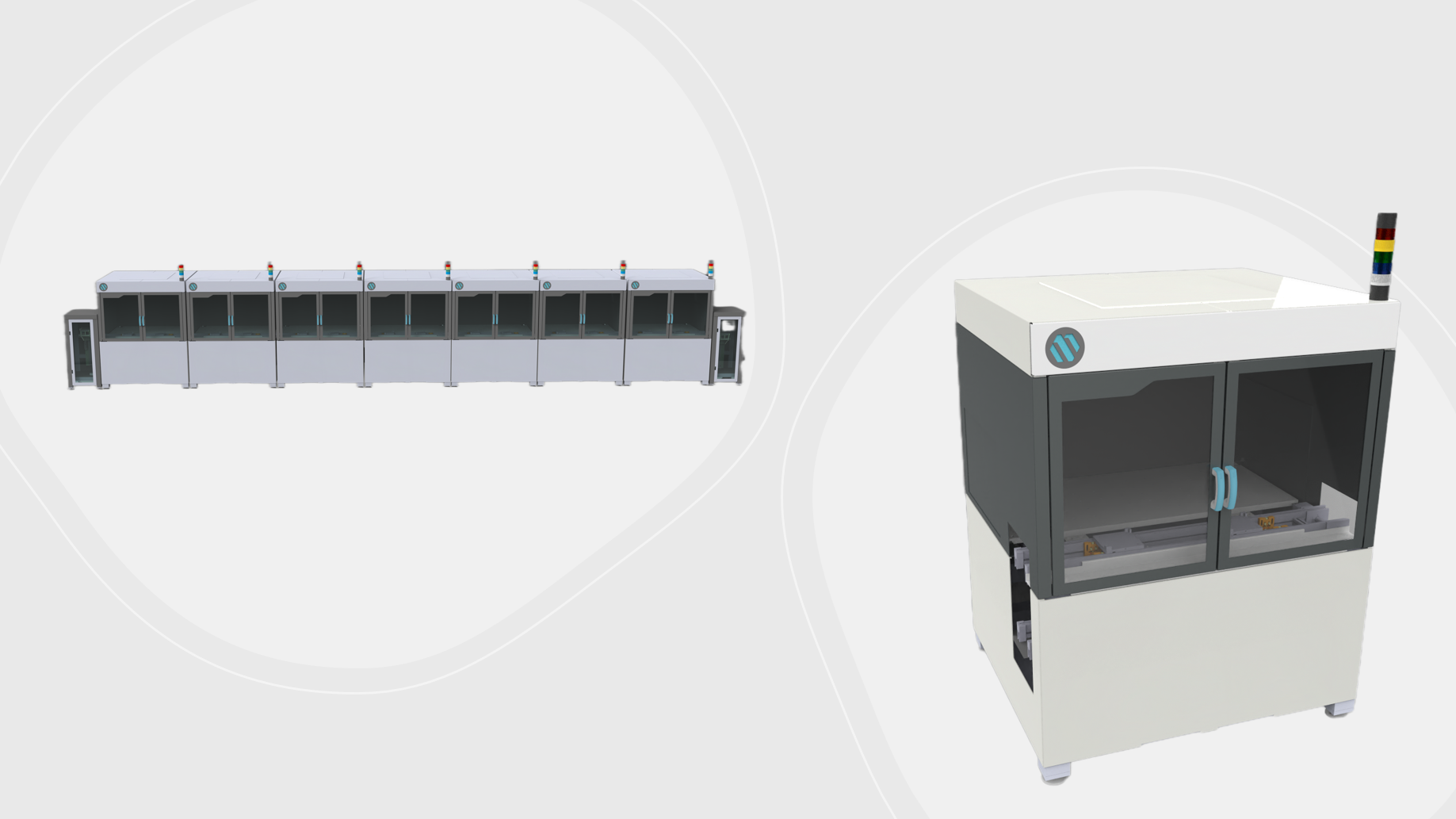
MTRONIQ Modular Automation System consists of standardised modules connected in sequence to create automated production lines. Each module combines a common structural and transport platform with process equipment selected for the specific manufacturing application.
Developed by MTRONIQ, the platform brings together conveying, precise positioning, traceability, and an enclosed working area. This foundation supports the integration of loading, processing, assembly, marking, inspection, and unloading operations.
Core Module — Design and Functionality
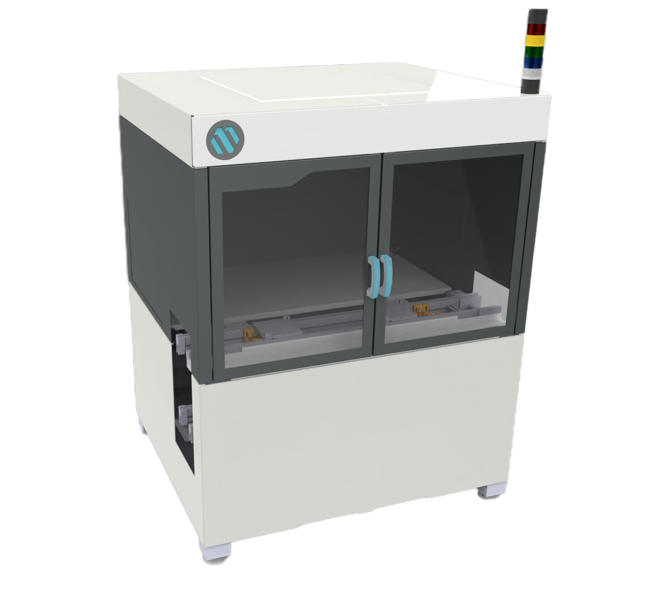
The core module is the repeatable structural unit of the system and includes:
Rigid welded steel frame — a stable supporting structure for the conveyor system, positioning mechanisms, and process equipment.
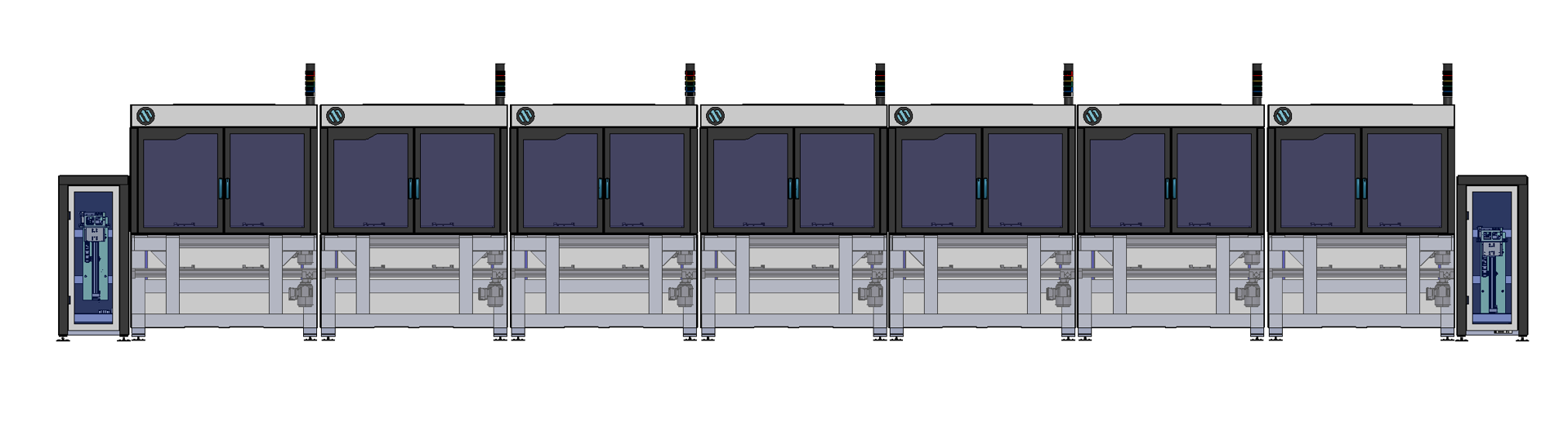
Process and return conveyors — two vertically arranged conveyors. The process conveyor moves carriers through the production operations, while the return conveyor transports empty carriers back to the beginning of the line.
Universal pallets and workpiece carriers — reusable carriers equipped with fixtures tailored to the product geometry and positioning requirements.
Precision positioning mechanisms — provide accurate and repeatable carrier positioning at the workstation.
RFID readers — identify carriers and enable their movement through individual stations to be tracked.
Protective enclosure — constructed from powder-coated steel sheet, with safeguarded access doors for equipment operation and maintenance.
The common architecture allows different process stations to share the same standardised platform.
Transfer Stations and Carrier Circulation
Transfer stations move carriers between the process and return conveyors. Positioned at the ends of the line, they complete the transport loop and allow empty carriers to return for the next production cycle.
The vertical arrangement of the two conveyors reduces the need for additional floor space for the return transport route.
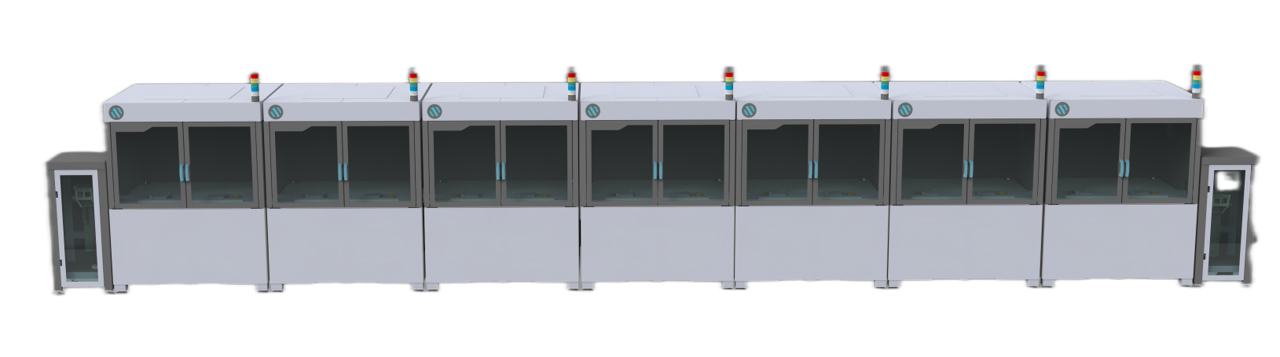
The illustrated configuration features seven core modules and two transfer stations. The number of modules and their process equipment are determined by the application.
How It Works
The product is placed on a carrier at the loading station.
The process conveyor moves the carrier through the required process modules in sequence.
At the relevant stations, the carrier is positioned, the specified operation is performed, and the required production data is recorded according to the system configuration.
The finished product is unloaded, and the empty carrier is transferred to the return conveyor and transported back to the beginning of the line.
Process Customisation
Depending on the manufacturing process, modules can be equipped for:
Manual or automatic loading and unloading.
Robotic handling and assembly.
Laser marking and engraving.
Screwdriving.
Pressing or punching.
Machine vision inspection and measurement, including AI-based inspection where appropriate.
Sorting, rejection of nonconforming products, and buffering.
Key Benefits
Standardised foundation — a common structural and transport architecture for different manufacturing operations.
Flexible configuration — module quantities and functions are tailored to the process sequence.
Expansion capability — the modular architecture supports planned additions as production requirements change.
Compact carrier circulation — process and return transport are integrated within the line structure.
RFID traceability — carrier identification provides a foundation for linking production data to individual operations.
Convenient maintenance access — process equipment is accessible through dedicated service doors.
Control and Integration
The control system and operator interface are configured according to the required operations, production takt time, and interaction between stations. Where required, the system can incorporate communication with a production database or MES, recording of inspection results, and data exchange with other equipment.
Each line configuration is developed around the product, process sequence, required capacity, available floor space, and traceability requirements.
Contact MTRONIQ for a modular production line configured around your product and process.
 EN
EN  BG
BG